The critical role of local teams when starting a new factory in developing production cultures
Why saving on the local team during a factory launch is one of the most expensive decisions a company can make.
Read article‹ All insights · Procurement & planning
The cheapest equipment on the tender sheet is often the most expensive one on the balance sheet.
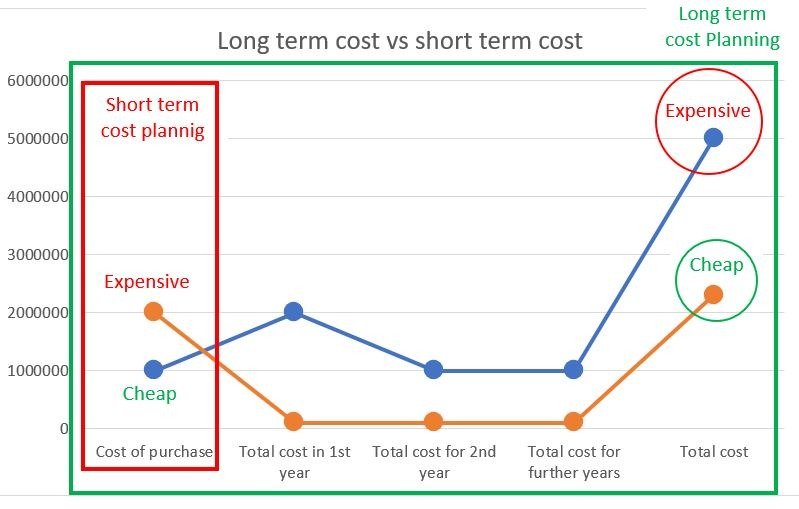
During operations and throughout their lifecycle, many companies need to update or expand facilities and other resources such as infrastructure, equipment and services. In purchasing and tenders, the decision is often based primarily on price rather than long-term applicability and needs. To demonstrate “economy”, project or procurement teams frequently use short-term targets.
In reality, companies need to save money and optimise cost throughout the entire lifecycle, not just at the beginning of the project.
Expenses that look low at first often become significantly higher in the medium or long term. Suppose equipment can be bought from two suppliers — one for $1 million, the other for $2 million. Most teams will choose the $1 million option if it “somehow” fits the requirements. But what if it produces much more scrap and needs constant adjustments and service? What if it costs an additional $2 million in the first year alone? Then the first years cost $3–4 million instead of $1 million. Because these expenses are spread over the year, teams may claim they saved money — without realising that money was lost because long-term planning was ignored.
These companies could have avoided the extra expense by ordering more suitable, higher-quality equipment at the outset. It costs more initially — and less within a year.
The mistake many companies make is separating the cost of procurement from the full lifecycle cost.
To achieve real savings, evaluate project cost over the entire lifecycle rather than just the initial launch cost. Looking at, for example, ten years and including the cost of scrap, teams calculate not only purchasing cost but also operation, maintenance, service and adjustment — and naturally look for equipment that is optimal in the long term.
Equipment, services and suppliers that are not the cheapest at first but more cost-effective over time — better construction, superior service, easier integration with other systems, a better reputation and support — save significant amounts of money. Applied to systems, services and suppliers as well, this approach makes projects far more profitable.
Need support calculating long-term cost? Contact us — our experts will help you achieve your project goals.

Why saving on the local team during a factory launch is one of the most expensive decisions a company can make.
Read article
SMART is not enough. Add Process and Person — and KPIs start managing for you.
Read article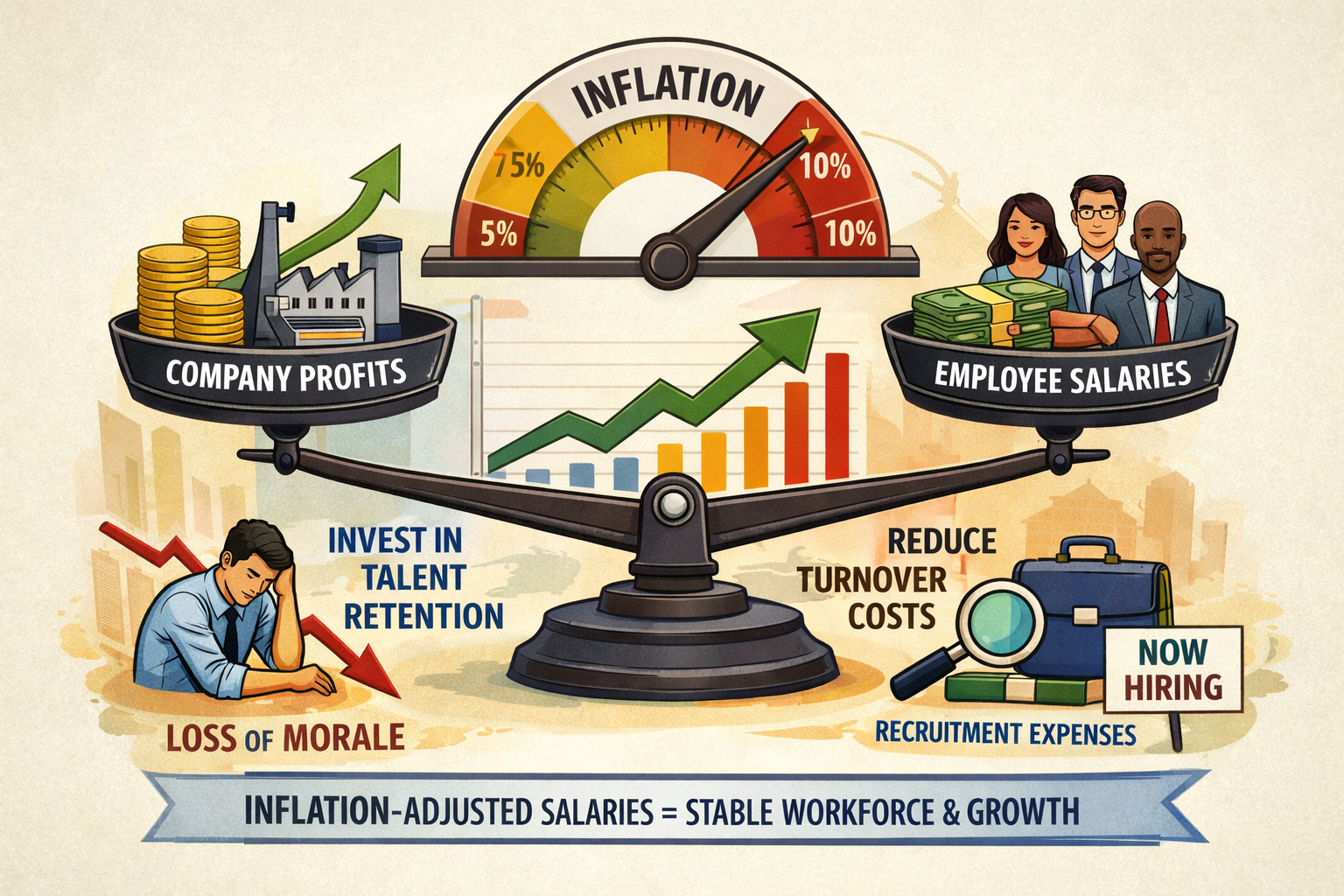
Salary adjustments below inflation are a pay cut — and a costly one.
Read article